A field guide to warm light
Kelvin, placement, and the one change that makes a room feel calmer after dark. A practical guide to lighting a desk.

A lit candle in an amber glass vessel beside a plant
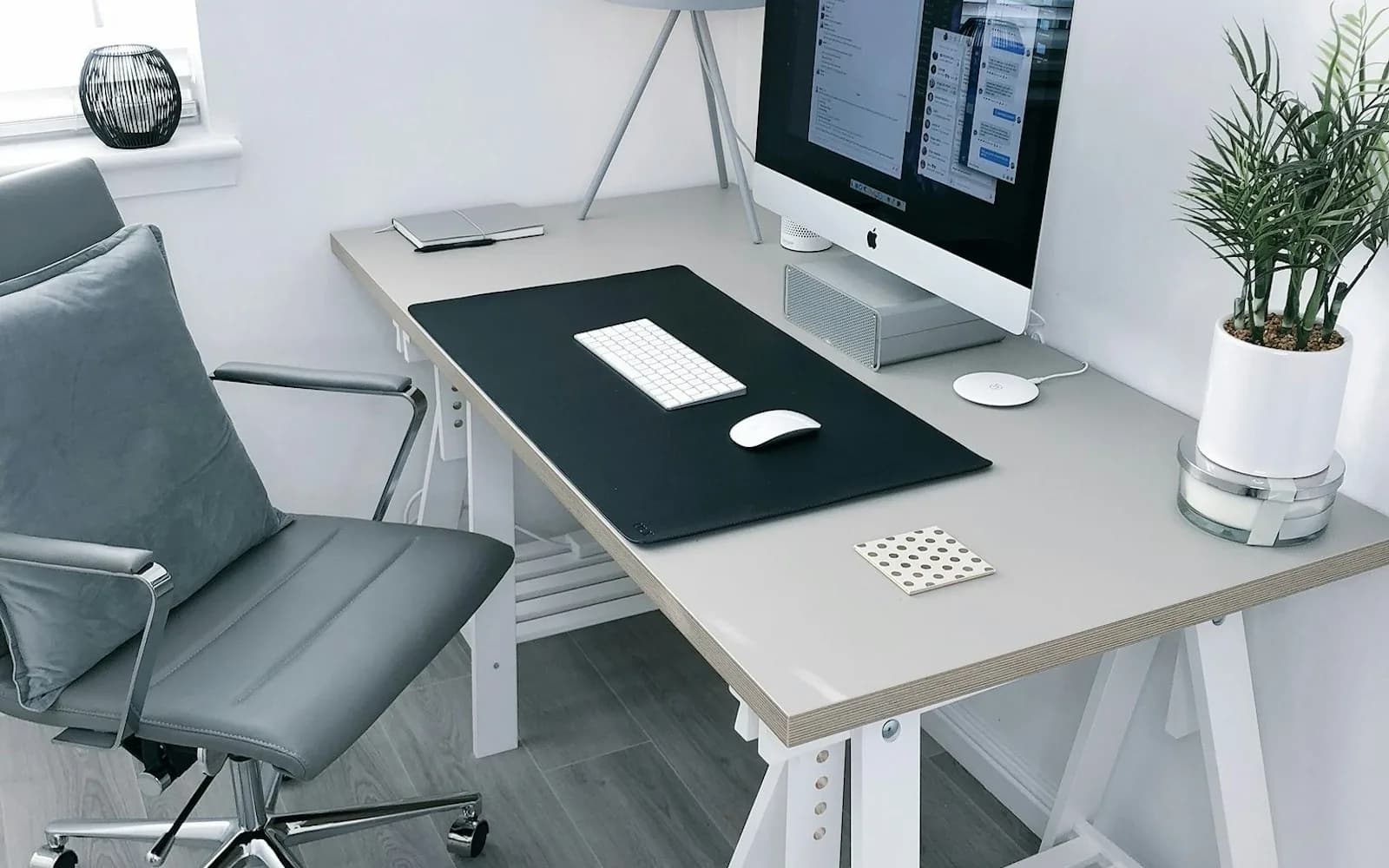
Most rooms are lit for the person standing in the doorway, not the person sitting at the desk. The ceiling fixture does the broad work, but it is the small, low, warm source that changes how a room feels at night.
Start at 2700K
Color temperature is measured in Kelvin. Counterintuitively, a lower number is warmer. Daylight at noon is around 5000K; a candle is closer to 1800K. For a desk lamp, 2700K is a good default: warm enough to feel like evening, neutral enough that colors still read true. If you do detailed work with color, 3000K is a reasonable compromise. Avoid anything above 4000K after dark; it reads as an office, not a room.
Put the light below eye level
A lamp whose shade sits above your line of sight throws light into your eyes and leaves the work in shadow. Lower the shade until the bulb is just below eye level, then angle it across the page rather than straight down. This is why task lamps have arms: the useful position is rarely the obvious one.
“The best evening light is the light you notice last.”
Dim everything, then dim one thing
Contrast is what makes a room feel composed. If the overhead light and the desk lamp are both at full strength, the room has no center. Turn the overhead down or off, and let the desk be the brightest place in the room. The eye follows the light, and so does the attention.
Two small sources are almost always better than one large one. A lamp and a candle. A lamp and a low floor light in the corner. The room gets depth, and you get a place to look that is not a screen.
A note on flicker
Cheap LEDs can flicker at a frequency you do not consciously see but your eyes still register, especially at low dimming levels. If a lamp gives you a headache after an hour, it is worth replacing the bulb before you replace the lamp. Look for dimmable drivers rated for the full range, not just the top half.
Written by
Morrow Studio